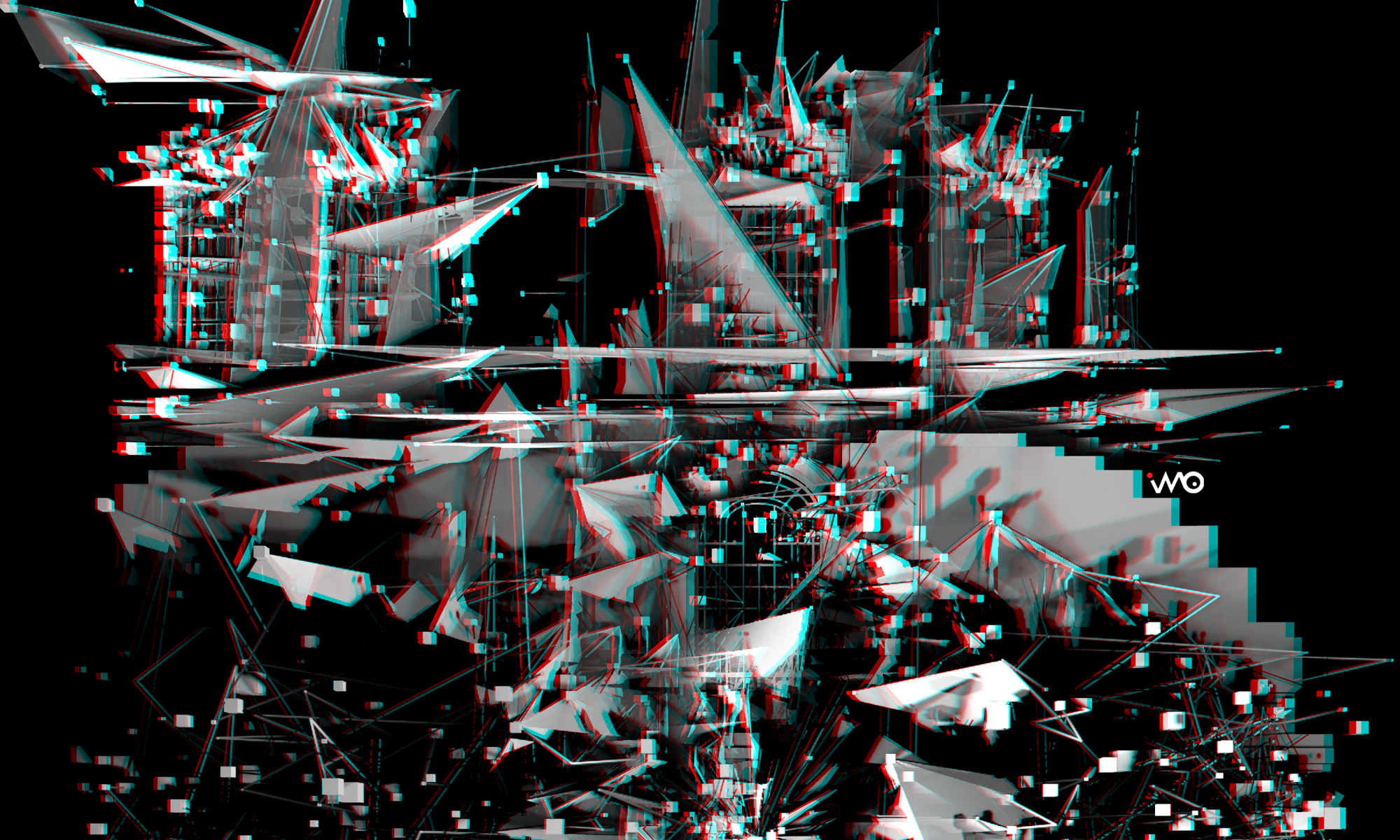
On view now — Tessela is on display at M21 Gallery, Pécs, Hungary through 23 August 2026, running unattended throughout opening hours. For those who haven’t yet stood in front of it, or want to know what lies behind it, here is the piece’s story.
Perceptual Spaces – Hommage à Vasarely by Light
Group exhibition by the Lighthouse Association and guest artists organized by the Lighthouse Association”. – For the 120th anniversary of the birth of Victor Vasarely.

THE PROGRAM
The starting point of Tessela is the program of Vasarely’s œuvre, as the title of the 1965 exhibition The Responsive Eye fixes it: the image does not depict — it operates; the terrain of the work is not the canvas but the viewer’s perception. The bulging grids of the Vega series do not depict a sphere; the sphere comes into being in the viewer’s perception. With this program Vasarely anticipated, by decades, what we now call immersive or interactive media art.
Contemporary new media frequently invokes this legacy, typically at the level of visual motifs; the original perceptual question — what does the eye see, and what does the brain construct — is less often at the centre of the works. Tessela returns to this program, and continues where the painter’s toolkit came to its end.
GEOMETRY, PRESENCE, LIVE IMAGE
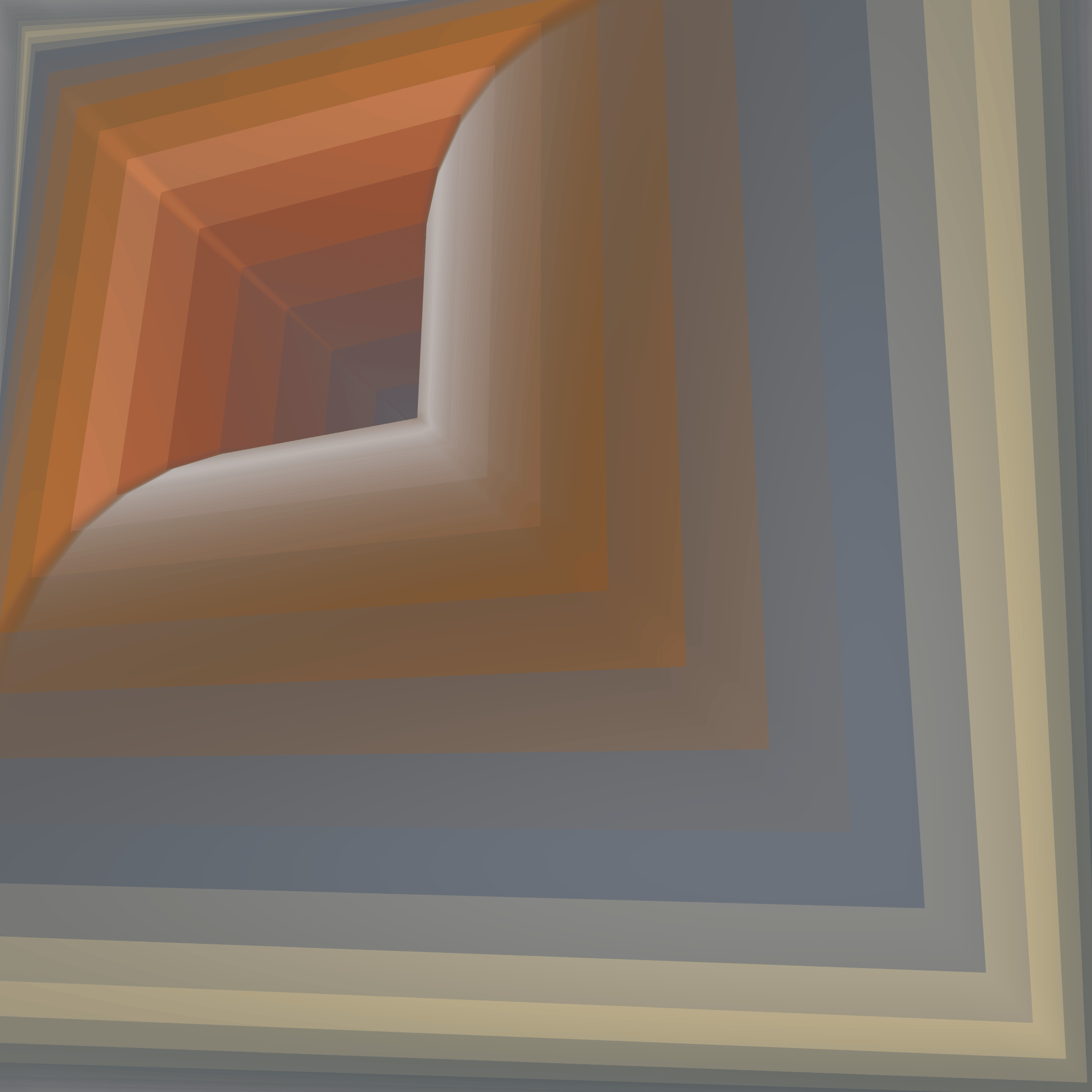
The first layer of the continuation is geometry. Vasarely achieved the bulge of the Vega grids through perspectival distortion, as a painterly illusion. The grid of Tessela curves according to the Poincaré disk model of hyperbolic geometry: the cells grow denser towards the edges because of the real curvature of the space — the distortion follows from the structure of the space, not from an effect applied to its surface. This step has a scholarly precedent: in 2010 the mathematician Douglas Dunham published a hyperbolic reinterpretation of Vasarely’s patterns (Hyperbolic Vasarely Patterns) — at the Bridges conference, held that year precisely in Pécs. Tessela runs this mathematics live, and connects three levels in a single work: Vasarely’s Euclidean illusion, Dunham’s hyperbolic geometry, and the real, physical space of the viewer.
The second layer is the presence of the viewer. An infrared camera watches the space in front of the projection; there is no touch, no deliberate gesture — the viewer’s mere bodily presence shapes the image. Approaching, the grid flattens and magnifies; stepping back, it regains its curvature; when no one is present, the image settles into a slow, autonomous drift. What the program of the Responsive Eye entrusted to the beholder is here measured and answered by the work itself: the viewer literally stands inside the active structure. The legacy is thus continued not by reproducing the pattern, but by rebuilding the relationship between viewer and image.
The third layer is time. Five scenes, each of roughly two minutes, follow one another in a continuous cycle; all derive from the same mathematical core, and together they trace the path from the bulge of the Vega plane to reverse-perspective spaces opening into depth. The image is regenerated at every moment, sixty times a second — not a video that repeats, but a system that is happening.





CONTEXT
Ivó Kovács has been designing architectural projections and immersive spaces for two decades. Tessela is a piece of research distilled from this practice, reduced to a single projected image: every element of it is about perception, not spectacle. Constructivist reduction — few elements, precise relations — is a method here, not a stylistic device: the same tradition that Vasarely absorbed at the Műhely academy in Budapest, in the circle of the Hungarian Bauhaus.
The work is presented in Pécs, Vasarely’s birthplace, in the year of the 120th anniversary — in the city where Dunham’s paper was delivered in 2010. The origin in Pécs, the international legacy of Op Art and contemporary generative art thus converge in a single installation.
The execution is deliberately modest: one projector, a palm-sized computer, an infrared camera; the system runs unattended for the entire duration of the exhibition. The emphasis is not on the apparatus, but on what happens between the viewer and the image.
DOCUMENTATION
Essay and mathematical notes
tessela.ivo3d.com/#/essay — the Math and Code chapter can be selected at the top of the page
Interactive scenes (run in the browser — explore with the mouse, or control them with the laptop camera)
Scene 1 Scene 2 Scene 3 Scene 4 Scene 5
Videos (YouTube Shorts)
Hommage à Vasarely — Vega-series 1v. Hommage à Vasarely — Vega-series 2v.
Hommage à Vasarely — Vonal-Fegn 3v. Hommage à Vasarely — Quasar-Dia 4v.
Hommage à Vasarely — Dess-version 5v.

Ivó Kovács
· ivo3d.com
· 2026
