What Does It Mean to Be Inside an Image?

On immersion, presence, and why the frame had to disappear

Ivó Kovács  ·  ivo3d.com

From 19th-century panoramas to architectural video mapping: media artist Ivo Kovács traces the history and theory of immersion and spatial presence.

I have spent the better part of two decades projecting light onto surfaces that were never designed to receive it — cathedral facades, purpose-built sculptural objects, civic walls in the middle of the night. What keeps drawing me back to this practice is a question I have never fully resolved: at what point does a viewer stop looking at an image and start being inside one?

This is not a new question. It is, in fact, one of the oldest ambitions in the history of art.

Long before digital projectors existed, panorama painters in 19th-century London and Paris were building circular rotundas designed to suppress the edge of the canvas entirely. Visitors descended into a darkened room and found themselves, apparently, standing on a hilltop overlooking a battlefield or a city skyline. The frame had disappeared. What remained was the sensation of being there. We call this immersion — and its logic has not fundamentally changed in two hundred years, even as its technical means have transformed beyond recognition.

What has changed is the relationship between the image and time. The painted panorama was static; you could look, but you could not influence what you saw. Contemporary immersive environments — responsive, generative, computationally alive — are constituted by the viewer’s presence within them. The work does not exist in a fixed state. It becomes itself through the body moving through it.

This shift carries theoretical weight. When Maurice Merleau-Ponty argued that the body does not observe space but inhabits it, he was describing something that immersive art now literalises: the dissolution of the distance between perceiver and perceived. Scale, acoustic depth, responsive light — these are not decorative tools. They are the architecture of a different kind of attention.

Over the years I have tried to map this territory through my own practice — at competition facades, at medieval churches, at purpose-built installations — and through the theoretical frameworks that help me understand what I am actually doing when I ask a viewer to surrender their sensory horizon.

The Q&A below is an attempt to make that map legible.

→  Read: The Architecture of Experience — 10 Questions on Immersion

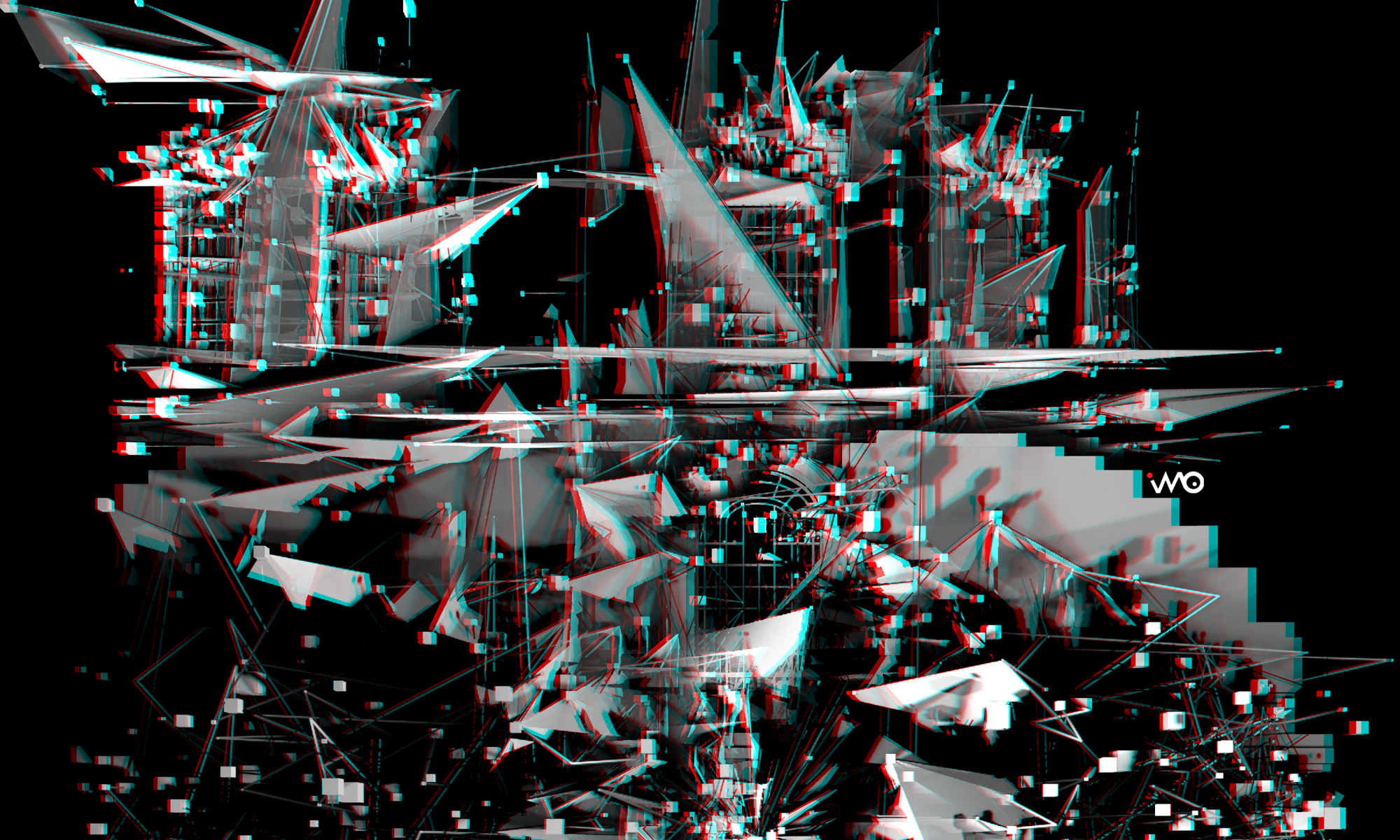
luminbird @imapp 2024

Jury Award at iMapp Bucharest – Winners League 2024 – Legacy’

Luminbird’

3D/ video: Ivó Kovács
Music: József Iszlai

Original ‘Big-wing’ motion courtesy of Derengo Animation, special thanks to La Luz.

Organizers:

Municipality of Bucharest, through CREART – Centre for Creation, Art, and Tradition of Bucharest

iMapp Bucharest – Winners League partner:

Parliament of Romania – Chamber of Deputies

iMapp Bucharest – Winners League International partners:

Chongqing Light Festival – CHINA,
Video Mapping Festival Lille – FRANCE,
Genius Loci Weimar Festival – GERMANY,
1minute Projection Mapping Competition – JAPAN,
Zsolnay Light Festival – HUNGARY,
ILO – International Light Festivals Organization

article-hypeandhyper

‘Stepping out of the traditional framework of exhibitions—Interview with curator Viola Lukács’ – Another article about ‘Klara and the Sun’ exhibition @Pegazus, Hungary.

Some theories, aka bla-bla-bla

Some theories, aka bla-bla…

Preface/ disclosure

First and foremost, it is said, when you start to do or make something, you should start with your motivation. When your motivation is cleared from your personal scales – your actions will not miss your target after – your action will benefit the others.
This is your sandbox, your only protection – your cleared and examined motivation.
The ‘local railway lines’ becomes uninteresting.
You will soon find yourself in the mainstream of desires, where you will need this protection and the ability to see further than your boundaries marked. You won’t miss and loose the big picture anymore, just keep the focus.

router – ‘avoid the local railway lines’, photo by ivo3d.com

When you start to write a critique (in this case about an art-form) often happens that your driving force is your anger. They say, when you think – for example in a debate – that you are right, it is actually an expression of anger. Obviously, we should avoid the feeling in any form. Actually it is not a pleasant feeling anyway.
According to the traditional Buddhist view, we could distinguish between the relative and absolute state of the truth. As a deeply concerned idealist, I suppose there is an absolute state of truth, which comes from the understanding the nature of the mind, while the relative truth is the understanding how nature works, e.g. understanding the phenomenons in the world. This idea somewhat correlates with the European tradition, which was built upon the ancient Greek tradition (Plato, Socrates, Aristotle), restarted with the renaissance and fully blossomed in the enlightenment movement.
I was built upon these traditions, on the same time I am aware, that we are living in a post-modern, a post-truth world, where facts have become opinions, truth is just the question of the rhetoric and money, propaganda was renamed to marketing, art validated by its market value, businessman have lost their numbers but got instead visions and the public opinion has become the irreplaceable, unquestionable God.
What’s more, we are going to cement these patterns with the machine learning methods for the prolonged and already saved future. The system of the uncertainty was balanced finally.
This landscape is going to be quite frightening.

‘Punny humans feels there is something missing…’

And then, a sudden flash:
Covid-19

At least we have found something in common in us.

It is time to get back our culture, this will save us e.g. through the (healthcare) science first, then the rest, the Republic, Rule of law, our cultural heritage and Art.
Nature also got a breath for a moment, hopefully it won’t be our last too.

Take this time for educating yourself, we will need to get your brain back, a bit rewired:)

to be continued..

CONTRASTS – FIVE ARTISTS FIVE WORKS – DEBRECEN 2016