Tessela-M21-Gallery-Pecs

On view now โ€” Tessela is on display at M21 Gallery, Pรฉcs, Hungary through 23 August 2026, running unattended throughout opening hours. For those who haven’t yet stood in front of it, or want to know what lies behind it, here is the piece’s story.

Perceptual Spaces โ€“ Hommage ร  Vasarely by Light

Group exhibition by the Lighthouse Association and guest artists organized by the Lighthouse Association”. – For the 120th anniversary of the birth of Victor Vasarely.

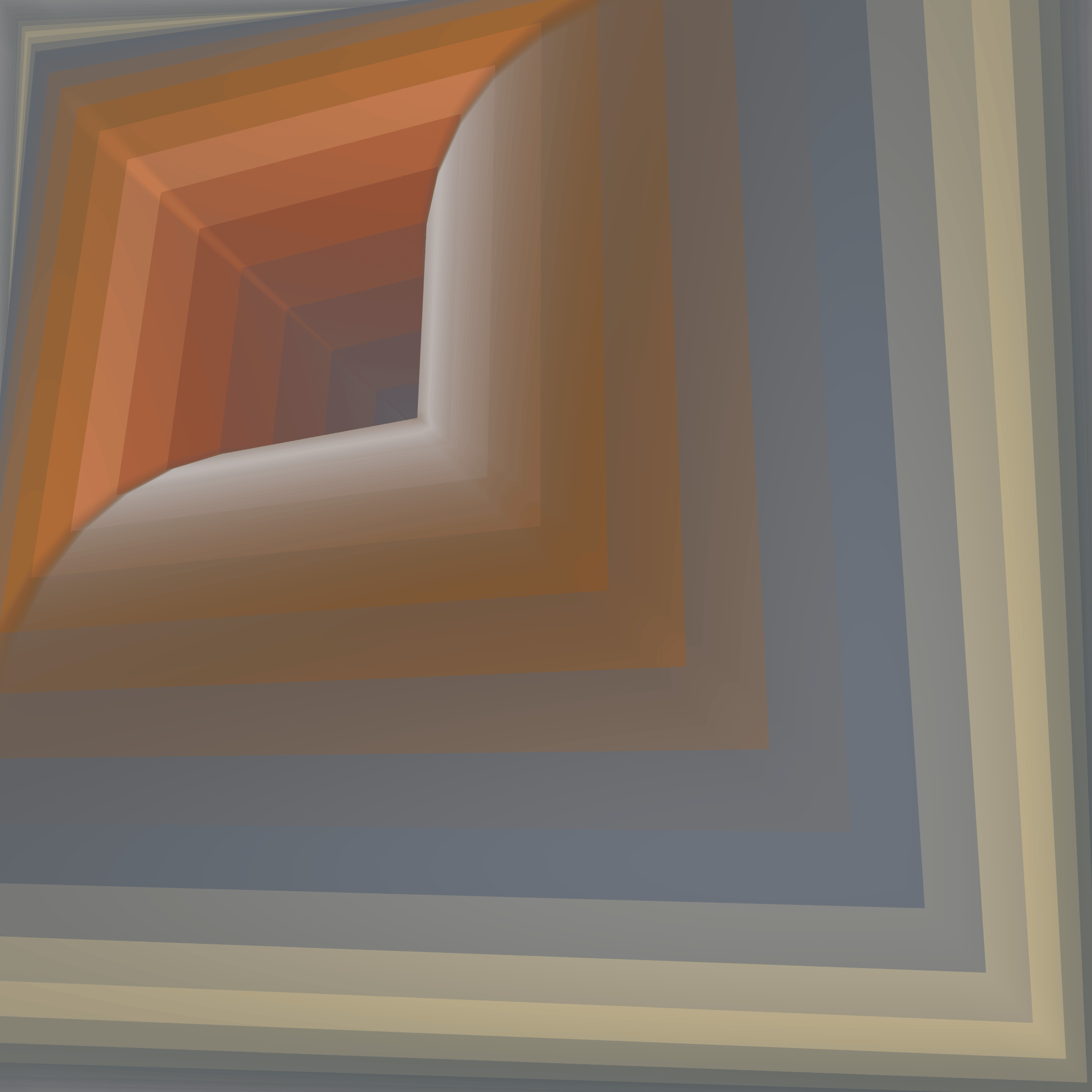
Scene 1 โ€” Difference: a chromatic-aberration reading of the Vega grid. Still from the real-time rendering.

THE PROGRAM

The starting point of Tessela is the program of Vasarely’s ล“uvre, as the title of the 1965 exhibition The Responsive Eye fixes it: the image does not depict โ€” it operates; the terrain of the work is not the canvas but the viewer’s perception. The bulging grids of the Vega series do not depict a sphere; the sphere comes into being in the viewer’s perception. With this program Vasarely anticipated, by decades, what we now call immersive or interactive media art.

Contemporary new media frequently invokes this legacy, typically at the level of visual motifs; the original perceptual question โ€” what does the eye see, and what does the brain construct โ€” is less often at the centre of the works. Tessela returns to this program, and continues where the painter’s toolkit came to its end.

GEOMETRY, PRESENCE, LIVE IMAGE

The first layer of the continuation is geometry. Vasarely achieved the bulge of the Vega grids through perspectival distortion, as a painterly illusion. The grid of Tessela curves according to the Poincarรฉ disk model of hyperbolic geometry: the cells grow denser towards the edges because of the real curvature of the space โ€” the distortion follows from the structure of the space, not from an effect applied to its surface. This step has a scholarly precedent: in 2010 the mathematician Douglas Dunham published a hyperbolic reinterpretation of Vasarely’s patterns (Hyperbolic Vasarely Patterns) โ€” at the Bridges conference, held that year precisely in Pรฉcs. Tessela runs this mathematics live, and connects three levels in a single work: Vasarely’s Euclidean illusion, Dunham’s hyperbolic geometry, and the real, physical space of the viewer.

The second layer is the presence of the viewer. An infrared camera watches the space in front of the projection; there is no touch, no deliberate gesture โ€” the viewer’s mere bodily presence shapes the image. Approaching, the grid flattens and magnifies; stepping back, it regains its curvature; when no one is present, the image settles into a slow, autonomous drift. What the program of the Responsive Eye entrusted to the beholder is here measured and answered by the work itself: the viewer literally stands inside the active structure. The legacy is thus continued not by reproducing the pattern, but by rebuilding the relationship between viewer and image.

The third layer is time. Five scenes, each of roughly two minutes, follow one another in a continuous cycle; all derive from the same mathematical core, and together they trace the path from the bulge of the Vega plane to reverse-perspective spaces opening into depth. The image is regenerated at every moment, sixty times a second โ€” not a video that repeats, but a system that is happening.

CONTEXT

Ivรณ Kovรกcs has been designing architectural projections and immersive spaces for two decades. Tessela is a piece of research distilled from this practice, reduced to a single projected image: every element of it is about perception, not spectacle. Constructivist reduction โ€” few elements, precise relations โ€” is a method here, not a stylistic device: the same tradition that Vasarely absorbed at the Mลฑhely academy in Budapest, in the circle of the Hungarian Bauhaus.

The work is presented in Pรฉcs, Vasarely’s birthplace, in the year of the 120th anniversary โ€” in the city where Dunham’s paper was delivered in 2010. The origin in Pรฉcs, the international legacy of Op Art and contemporary generative art thus converge in a single installation.

The execution is deliberately modest: one projector, a palm-sized computer, an infrared camera; the system runs unattended for the entire duration of the exhibition. The emphasis is not on the apparatus, but on what happens between the viewer and the image.

DOCUMENTATION

Essay and mathematical notes

tessela.ivo3d.com/#/essay โ€” the Math and Code chapter can be selected at the top of the page

Interactive scenes (run in the browser โ€” explore with the mouse, or control them with the laptop camera)

Scene 1 Scene 2 Scene 3 Scene 4 Scene 5

Videos (YouTube Shorts)

Hommage ร  Vasarely โ€” Vega-series 1v. Hommage ร  Vasarely โ€” Vega-series 2v.

Hommage ร  Vasarely โ€” Vonal-Fegn 3v. Hommage ร  Vasarely โ€” Quasar-Dia 4v.

Hommage ร  Vasarely โ€” Dess-version 5v.

Ivรณ Kovรกcs

ยท ivo3d.com
ยท 2026


LIQUID HORIZONS โ€” Ivรณ Kovรกcs | 360ยฐ Immersive Video Installation

LIQUID HORIZONS โ€” an immersive video installation (at Fixir Gallery, Veszprem)
by Ivรณ Kovรกcs, reconstructed as a fully navigable 360ยฐ space.

In its physical form, the work encloses the visitor in a 4.2 ร— 4.2 m room of four seamless projected walls โ€” a single, uninterrupted synthetic space with no doors, no paths, no horizon to hold on to. The viewer’s own body becomes the only fixed point of reference.

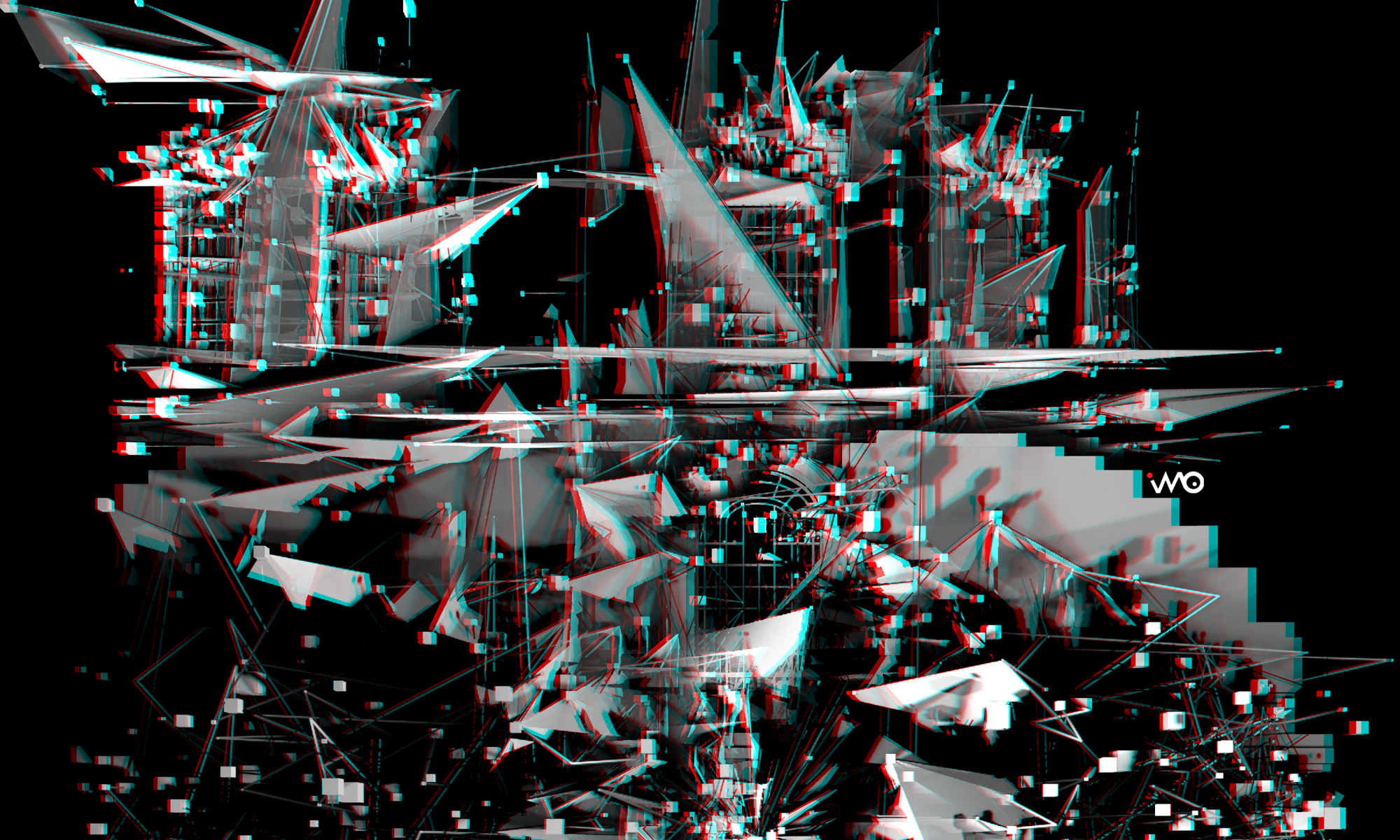
Six scenes unfold without narrative โ€” glitch corridor, brutalist labyrinth, biological vein networks, geometric core, spectral veils, liquid-architecture, synthetic horizons โ€” juxtaposing Trauma-Arbeit and utopia in a digital realm, somewhere between architectural critique and algorithmic aesthetics.

This 360ยฐ version was rebuilt in TouchDesigner and rendered in 8K from the exact center of the room โ€” on the one spot where visitor could stand.

๐ŸŽง Use headphones. ๐Ÿ“ฑ Drag the screen or move your phone to look around. ๐Ÿฅฝ Best experienced in a VR headset in 8K.

Video: Ivรณ Kovรกcs
Music: Jรณzsef Iszlai
Year: 2026 | Duration: 17:16
Made with: Notch, Stable Diffusion, 3D simulation, TouchDesigner
More: https://3dvideomapping.net/art/installation-art/2026-liquid-horizons/ | https://liquid.ivo3d.com

#360video #VR #videoart #8K #immersive #newmediaart #videoinstallation #ivo3d #generativeart #digitalart #audiovisual #syntheticspaces #liquidhorizons #immersiveart #mediaart #fixir
#comfyui

LIQUID HORIZONS – 05.08.2026 @ f|x|r

LIQUID HORIZONS

liquid-horizon installation view

text, video: Ivรณ Kovรกcs
music: Jรณzsef Iszlai

Essay about the upcoming immersive video-installation at gallery f|x|r

Synthetic Horizons โ€” On the Ontology of Computed Space

Liquid Horizons investigates the ontology of computed space: the condition in which a digital environment is no longer a representation of physical reality but an autonomous, self-generating field. Its looped panoramic field โ€” built from six visual stations โ€” follows no narrative. The glitch-laden digital threshold, the brutalist concrete labyrinth, the AI-generated biological vascular network, the pure geometric order, the spectral veils and the synthetic horizon do not supersede one another: they coexist as equal aggregates, folding into a single continuous event.

liquid-horizons-brutalist-scene

At the centre of the work stands the question of the oneiric sublimation of trauma. The brutalist scenes of the projection โ€” mirrored concrete stairwells, unfinished stadium interiors, corridors that lead nowhere โ€” carry the architectural imprint of contemporary wartime destruction: an algorithmic monument to the suspended future. Not as documentation but as weightless data-flow โ€” the software does not depict the destruction; it dreams it. Through this digital Traumarbeit, raw concrete is transmuted into a pulsating network, then into pure geometric order, and finally sublimated into the light-saturated data-aesthetics of the computational sublime โ€” without the loop offering redemption. The cycle closes on itself.

liquid-horizons-veins-scene

In Vilรฉm Flusserโ€™s terms of the technical image: the light here does not arrive from sunlight but from global illumination algorithms; the texture of the canvas is definitively replaced by the texture of shader code. Through Gilles Deleuzeโ€™s Le Pli (The Fold): matter is not a static object but an infinitely modulable event โ€” brutalist enclosure and liquid freedom constitute a single topological unity. In Marcos Novakโ€™s liquid architecture: digital space severs its relationship with gravity and function to become pure mathematics and sensation.

liquid-horizons-tesseract-scene

The workโ€™s visual register is determined by three distinct image-making logics in simultaneous operation: real-time rendering (NotchVFX), AI-mediated style transfer (Stable Diffusion), and digitally processed built spaces. There is no sharp boundary between the three layers โ€” and this is itself the workโ€™s argument: in the era of the computed image, the distinction between โ€˜manualโ€™ and โ€˜automaticโ€™ image-making ceases to hold.

liquid-horizons-veils-scene

After the model of Marc Augรฉโ€™s non-places: the projected environment withholds every conventional marker of human orientation. There is no door, no path, no graspable surface. The visitorโ€™s own body remains the sole subjective fixed point within this amorphous, post-anthropocentric data-landscape โ€” whose horizon does not separate sky from earth but unifies them as a data-plane.

liquid-horizons-daylight

360ยฐ immersive video installation โ€” 17สน 20สบ videoloop, โ€” f|x|r galรฉria โ€” 05.08.2026 โ€” location: Vรกr u. 17., Veszprรฉm, Hungary, Europe


2026 – Die Pest in London

A Plague in London (Die Pest in London)

Interdisciplinary Mixed-Media Performance | Orangerie Theater Cologne (2026)

Project Description: “A Plague in London” is a mixed-media production situated at the intersection of performative arts and digital scenography. Based on Daniel Defoeโ€™s 1722 archival-style account, the work explores the structural and psychological dynamics of systemic crisis and social isolation. Directed by Kristรณf Szabรณ, the production utilizes Defoeโ€™s text as a conceptual framework to analyze the sociopolitical mechanisms of a pandemicโ€”ranging from institutional denial and the enforcement of urban confinement to the eventual erosion of communal structures.

Visual and Medial Strategy: The production is characterized by a multi-layered visual dramaturgy, where Ivรณ Kovรกcsโ€™s video art functions as a spatial and temporal mediator. Rather than serving as a purely illustrative background, the digital layer operates as a generative environment that reflects the interiority of the protagonists and the oppressive atmospheric silence of a city under lockdown. The visual components analyze the tension between the historical archival source and contemporary digital aesthetics, translating the 17th-century experience of quarantine into a modern medial discourse. Kovรกcsโ€™s work focuses on the abstraction of architectural boundaries and the visualization of the “Planet of Viruses” concept, examining the human condition through a lens of digital depth and spatial deconstruction.

Credits:

  • Artistic Direction, Set Design & Sound Dramaturgy: Kristรณf Szabรณ
  • Video Art: Ivรณ Kovรกcs
  • Performance: Maximilian von Mรผhlen, Boshi Nawa, Lili Oksanen
  • Source Material: Daniel Defoe: A Journal of the Plague Year (1722)
  • Venue: Orangerie Theater, Cologne, Germany
  • Production Year: 2026

support:

Inventions (Rubik’s cube)

Inventions โ€“ Stories of Hungarian Genius

Location: CODE Center of Digital Experiences, Veszprรฉm, Hungary

A group of people gathered in an art space (CODE) with abstract light projections on the walls (the shadow of Rubik's Cube), creating a dynamic atmosphere.

Opening: February 20, 2026

The screening, which combines the work of several creators, features five Hungarian inventors and scientists: Ernล‘ Rubik, รnyos Jedlik, Albert Szent-Gyรถrgyi, Katalin Karikรณ, and Jรกnos Neumann.

At the request of Centrum + Colloc Production, I created the section presenting Ernล‘ Rubik’s most famous invention (Rubik’s cube).

Director, art director: Dรกniel Besnyล‘, Mรกtyรกs Kรกlmรกn
Editor: Gรกbor Tarcsay
Music: รron Pfitzner
Narration text: Krisztiรกn Nyรกry
Narrator: Norbert Tuza

https://codeveszprem.hu/en

A vibrant, immersive room filled with colorful projections of Rubik's cubes on the walls and floor, creating a dynamic and playful atmosphere.
A vibrant display of colorful geometric patterns projected on walls and floor, creating an immersive digital art installation at Code Veszprem.